
Aerial Solar Thermography and Condition Monitoring of Photovoltaic Systems
InfraMation 2011 Application Paper Submission
By Harley Denio III, Level I Thermographer, Oregon Infrared LLC, and Harley Denio II, Level III Thermographer, Oregon Infrared LLC
Abstract
This paper illustrates how infrared thermography can be applied to determine the operational status of photovoltaic systems on a large aerial scale. Solar thermography involves using an infrared camera to inspect photovoltaic installations for issues that can cause cell damage, efficiency loss, and fire hazards. The increasing demand for affordable renewable energy has led to a significant rise in the construction of solar arrays and installations. Consequently, there's a growing need for accurately presented maintenance data. Identifying problems in these installations can be challenging; however, infrared thermography has proven to be a valuable tool for pinpointing issues in large arrays.
What is Photovoltaic Technology?
Understanding the fundamentals of solar power is essential when applying infrared thermography to photovoltaic systems. Solar radiation reaching a specific location on Earth's surface varies based on geographic location, time of day, season, local landscape, and weather conditions. Regions like the American Southwest receive more solar energy in the summer due to longer days and the sun's position directly overhead, making them ideal for harnessing solar radiation for energy conversion.
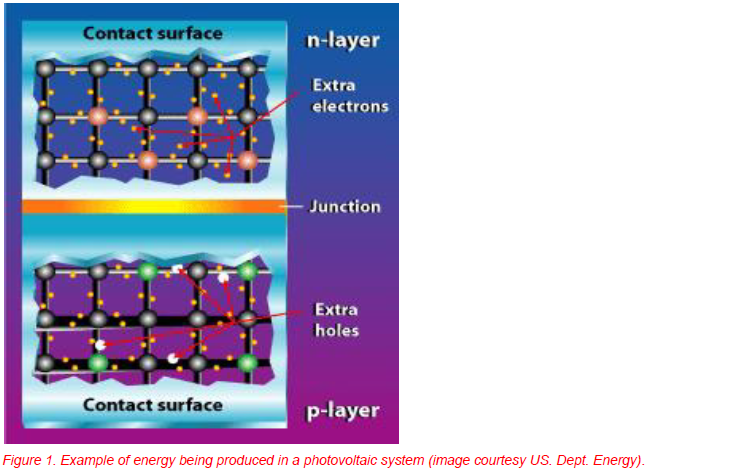
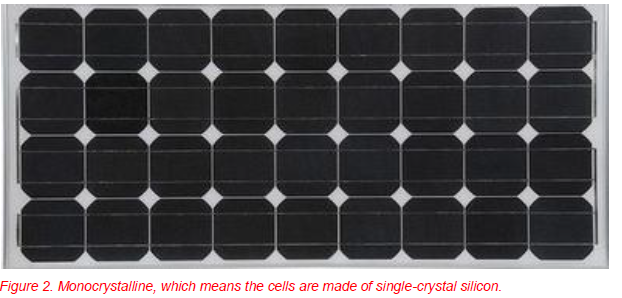
Photovoltaic cells convert sunlight into electricity. These cells are made of semiconductor materials, such as silicon, that absorb photons from sunlight, releasing electrons and generating an electric current. Individual photovoltaic cells are combined to form modules, which are further assembled into photovoltaic installations to meet specific energy requirements.
The Role of Infrared Thermography in Photovoltaic Systems
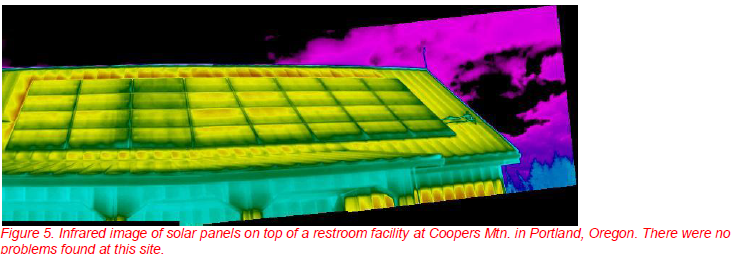
Infrared thermography is a non-contact diagnostic technique that detects infrared energy emitted from objects, converts it to temperature, and displays an image of temperature distribution. In photovoltaic systems, thermography is used to identify anomalies such as hot spots, which may indicate defective cells, interconnections, or bypass diodes. Early detection of these issues is crucial for maintaining system efficiency and preventing potential hazards.
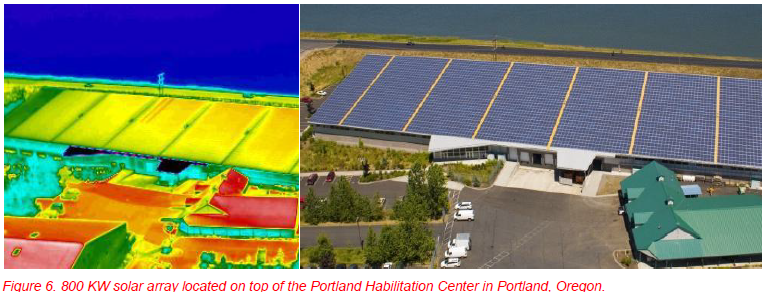
Aerial Thermography for Large-Scale Photovoltaic Installations
Inspecting large photovoltaic installations manually can be time-consuming and labor-intensive. Aerial thermography, using unmanned aerial vehicles (UAVs) equipped with infrared cameras, offers a more efficient solution. This approach allows for rapid, comprehensive inspections, capturing high-resolution thermal images that can be analysed to detect faults across extensive areas. Studies have demonstrated the effectiveness of UAV-based thermography in identifying defects in photovoltaic panels, enhancing maintenance strategies, and reducing downtime.
Conclusion
As the adoption of photovoltaic systems continues to grow, ensuring their optimal performance becomes increasingly important. Aerial infrared thermography has emerged as a valuable tool for the efficient inspection and condition monitoring of large-scale photovoltaic installations. By enabling the early detection of issues that could impair system performance or pose safety risks, this technology supports the reliable and sustainable operation of solar energy resources.
Related Articles
-
 Electrical/Mechanical
Beware What You Cannot See: A Practical Application of the Use of IR Windows
Read the Story -
 Thermography Fundamentals
Geometry effects; hedging your bet on emissivity!
Read the Story -
 Building Science
A 16-year Roof Moisture Study
Read the Story