
Furnace and Heater Tube Inspections
The Role of Infrared Thermography in HVAC Heating and Cooling System Maintenance
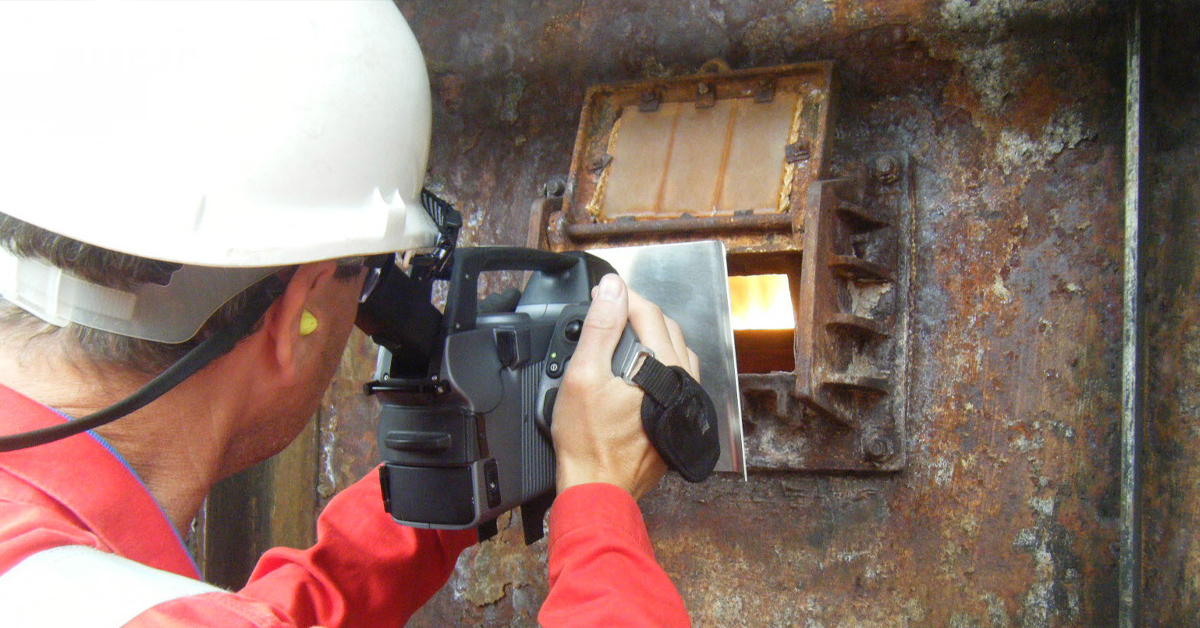
Inspecting furnace and heater tubes is a critical aspect of maintaining the efficiency and safety of industrial heating systems. One of the more challenging applications of infrared thermography is in the measurement of process heater and furnace tubes. Quantitative thermography is the practice of measuring temperatures accurately, and with furnace tubes, this requires experience and knowledge.
Success in this science is gained by being properly trained and certified as a Level I Furnace Inspection Thermographer. Certification training from the Infrared Training Center teaches you the techniques required for determining these values and provides a complete understanding of temperature measurement and heat transfer.
How Furnace Tube Inspections Benefit Cooling System Repair
Process heaters come in various designs, but they typically consist of a shell (outer casing), tubes (where the process fluid flows), and a heat source. These units are both thermodynamically and hydraulically complex. The simple drawing illustrates convective gas flow, which is turbulent, and radiant heat from the flame, refractory, and other tubes – all non-uniform and time-varying.
When you view a tube from an access port, typically, you can only see a portion of the tube or the tube at an oblique angle. Sometimes tubes are in rows, making them difficult, if not impossible, to image. Regular inspections using infrared thermography help detect early warning signs of wear and inefficiency, improving the effectiveness of cooling system repair efforts.
The Importance of Leak Detection Systems in Preventing Failures
Regular inspections can identify issues such as scale buildup on the outside of the tube and coking on the inside. In both cases, the scale or coke prevents the transfer of heat into the process fluid. In the case of scale buildup, the process fluid may not be sufficiently heated, affecting downstream processing.
The case of coking on the inside of the tube is more serious. Since the coke has an increased resistance to heat transfer, the tube surface temperature increases. After all, it is the flow of the process fluid that is keeping the tube “cool” in the first place. The external tube surface, unable to conduct its heat to the water, increases dramatically, causing a failure (opening) in the tube.
Metallurgists use the measured temperature to calculate the life of the tube, so accurate measurements are critical. A leak detection system can help prevent catastrophic failures by identifying small leaks before they turn into costly repairs.
Commercial Refrigeration Maintenance and Infrared Thermography
Infrared thermography offers operators the ability to visualise heat transfer and provide vital temperature data to help determine the remaining tube life. Certification training from the Infrared Training Center teaches you the techniques required to successfully implement this technology at your facility.
In the context of HVAC heating and cooling systems, similar principles apply. Regular inspections and maintenance are essential to ensure efficient operation and prevent failures. For instance, in commercial refrigeration maintenance, identifying issues such as scale buildup or internal obstructions can prevent inefficient cooling and potential system failures.
Enhancing System Performance Through Proactive Inspections
Implementing a leak detection system can also help in the early identification of issues, preventing costly repairs and downtime. Regular cooling system repair and maintenance ensure that the system operates efficiently, providing the desired temperature control and energy efficiency.
By integrating infrared thermography into your maintenance routine, you can enhance the reliability and efficiency of your HVAC heating and cooling systems, as well as your commercial refrigeration units. This proactive approach allows for early detection of potential issues, ensuring that your systems continue to operate at peak performance.
To learn more about the endless capabilities of thermography, get in touch with Infrared Training Center to enroll on our expert courses.
![[Process-heater-or-furnace-diagram13]](https://lh3.googleusercontent.com/-cNfvfmR4tDo/WcJtePFxfhI/AAAAAAAABRs/N_TENVbH1PwlogKIQLon3OLxTVapn_5cgCHMYCw/s1600/Process-heater-or-furnace-diagram13)
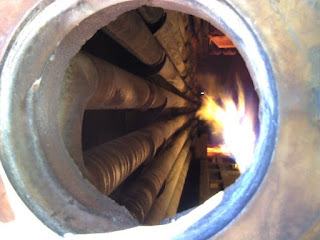
Tubes in a fired heater
Sample Thermal Images
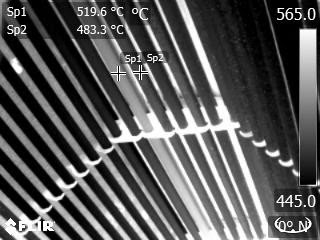
Tube with restricted flow
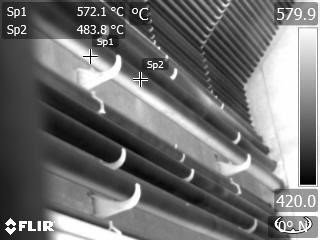
Coking on bottom of tube