
A 16-year Roof Moisture Study
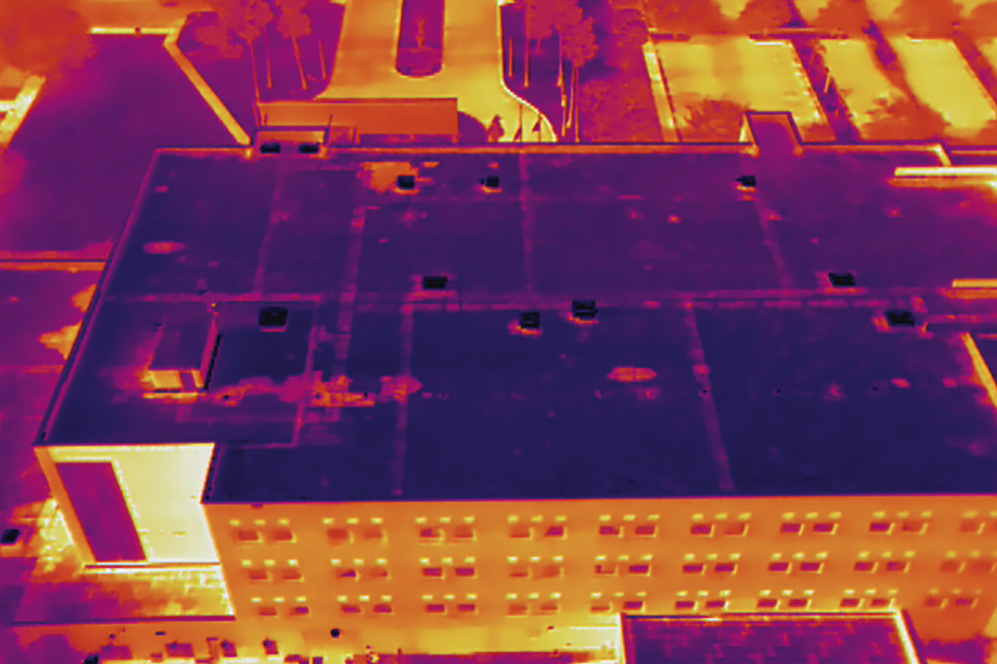
InfraMation 2018 Application Paper Submission
Gary Orlove
Infrared Training Center
ABSTRACT
On a spring day in 2002, I happened to look at the roof of a newly constructed hotel with an infrared camera and was amazed to find moisture damage built in to the roof. I have visited this same roof many times over a 16-year period and have recorded images of the spread of the moisture damage. 2018 marks the end of the long-term roof study and the results are presented in this white paper.
INTRODUCTION
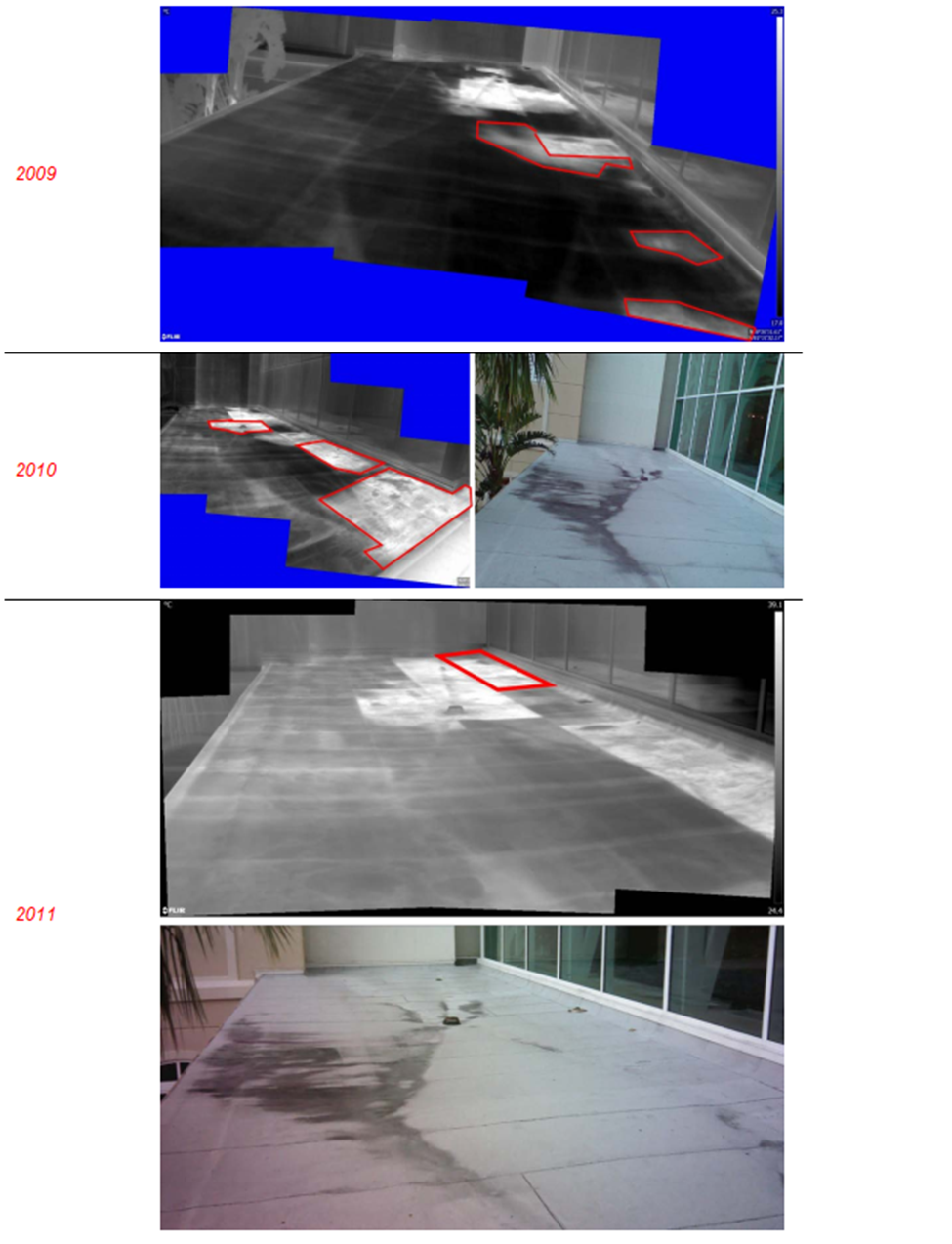
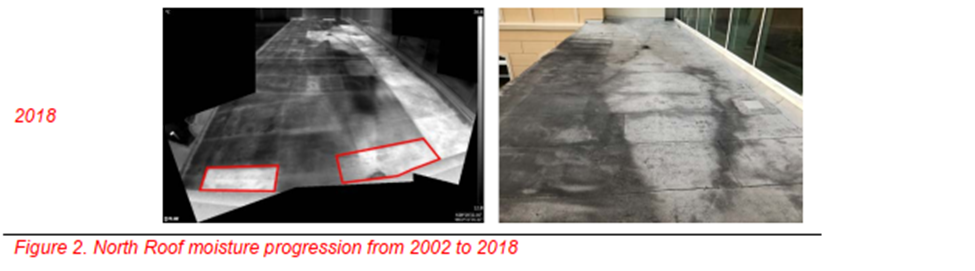
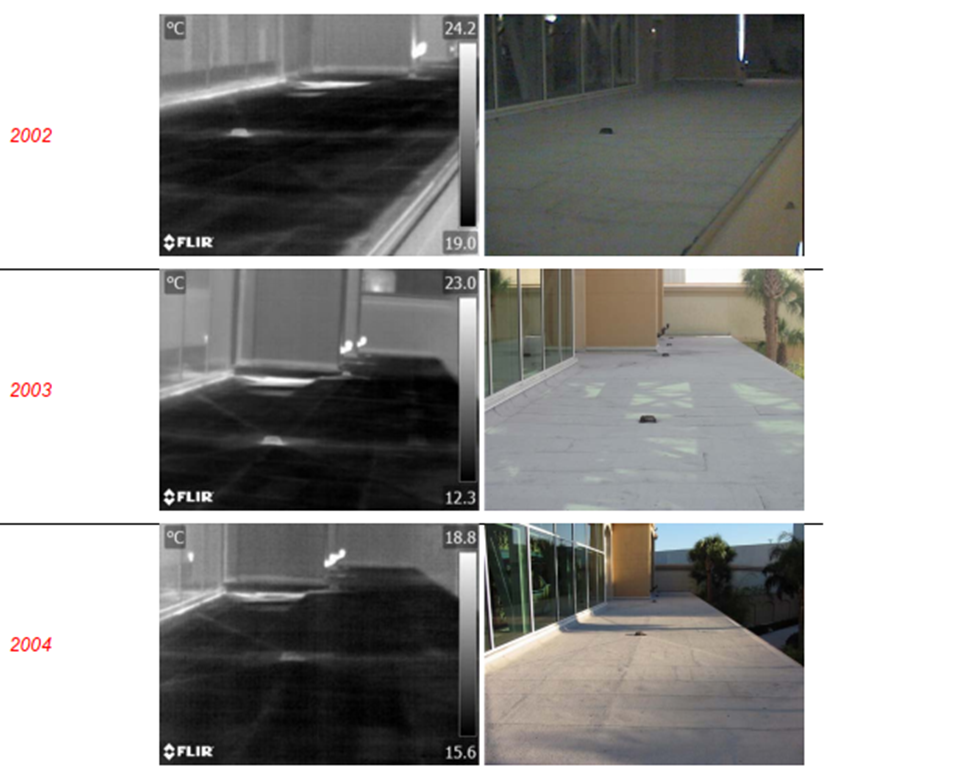
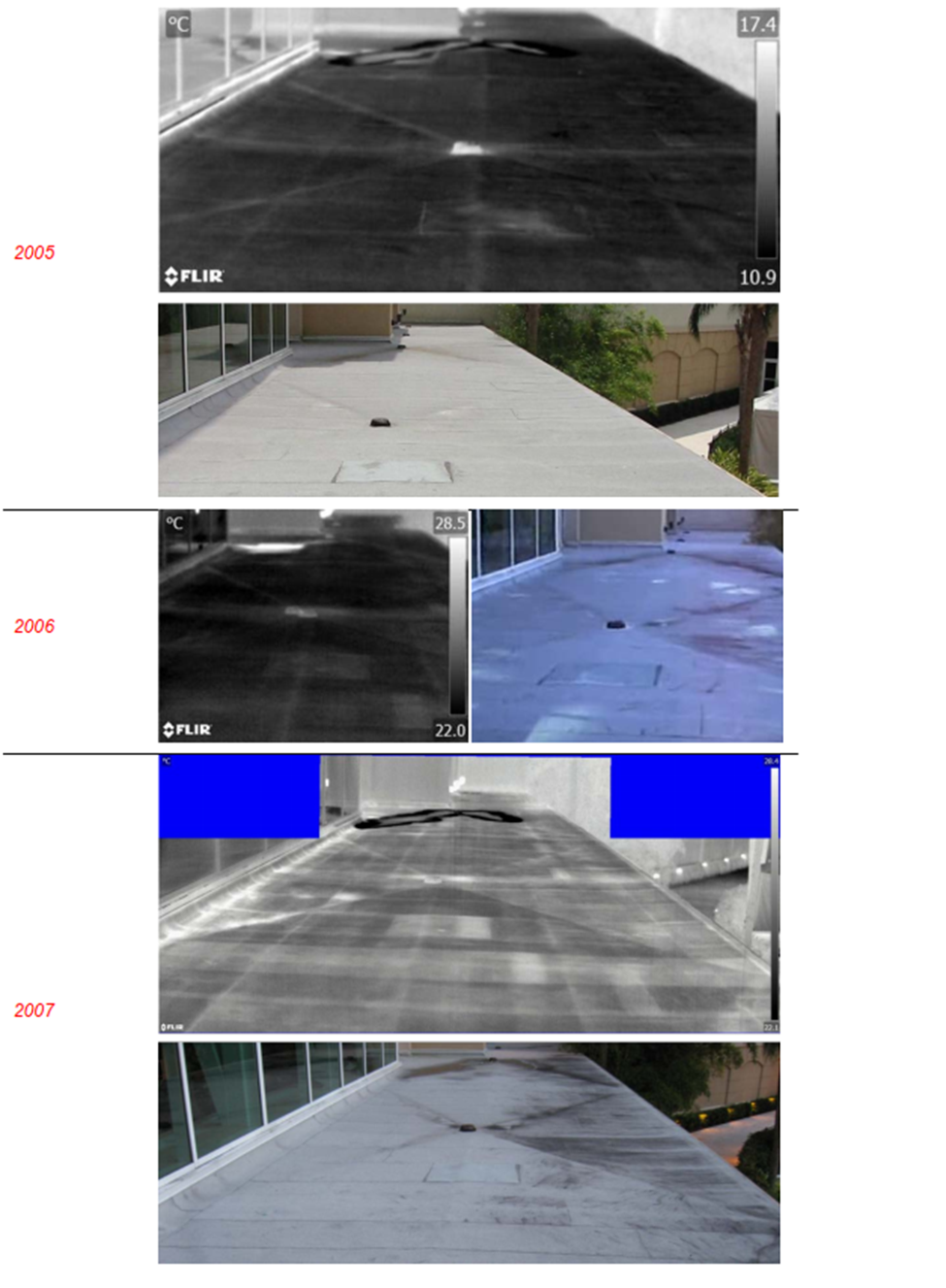
In 2002, an infrared inspection of a newly constructed hotel roof in Orlando, Florida, revealed unexpected moisture damage. Over 16 years, periodic infrared roof moisture scans documented the progression of this damage, underscoring the importance of roof leak detection and monitoring moisture levels in roof timbers.
Methodology
Infrared roof moisture scans detect temperature differences on roof surfaces, identifying areas where moisture-laden insulation retains heat longer than dry sections. This non-destructive technique is crucial for effective roof leak detection.
Findings
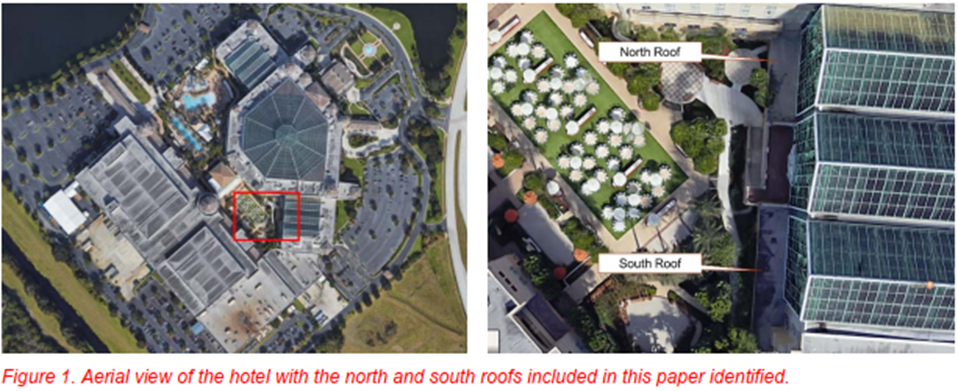
THE NORTH ROOF
Initial scans in 2002 identified two moisture-damaged areas. Over time, additional infrared roof moisture scans revealed the spread of moisture, highlighting the need for continuous roof leak detection.
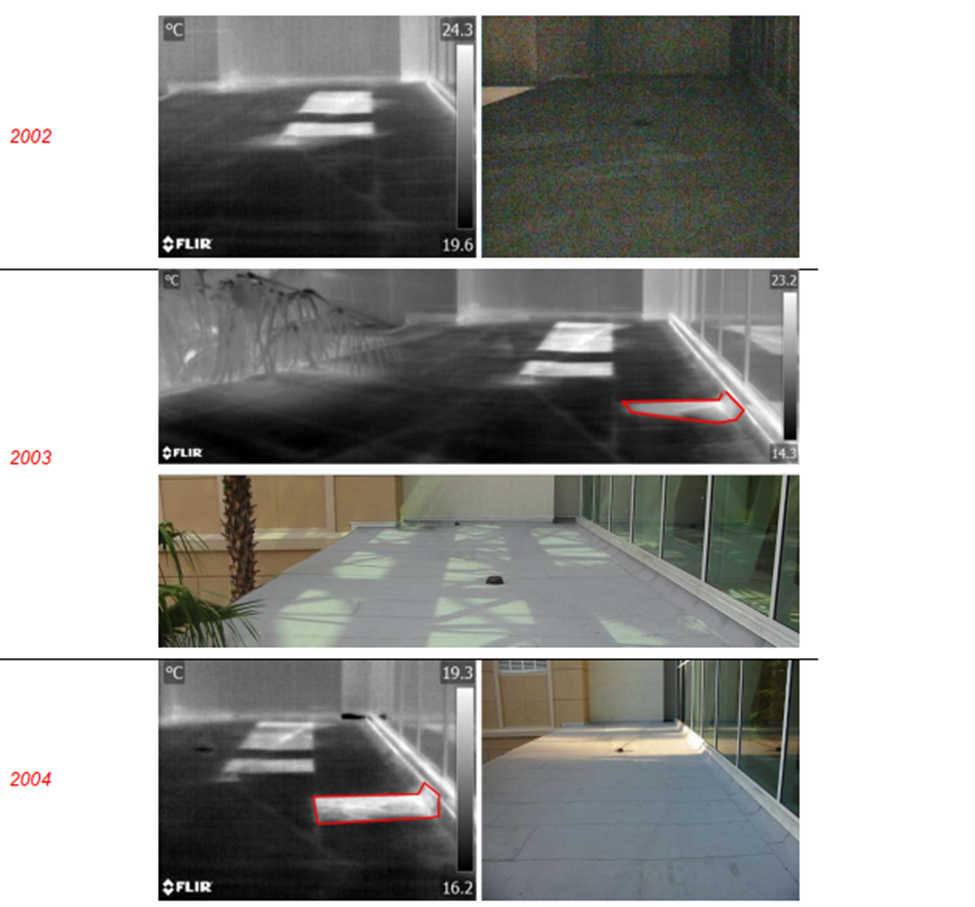
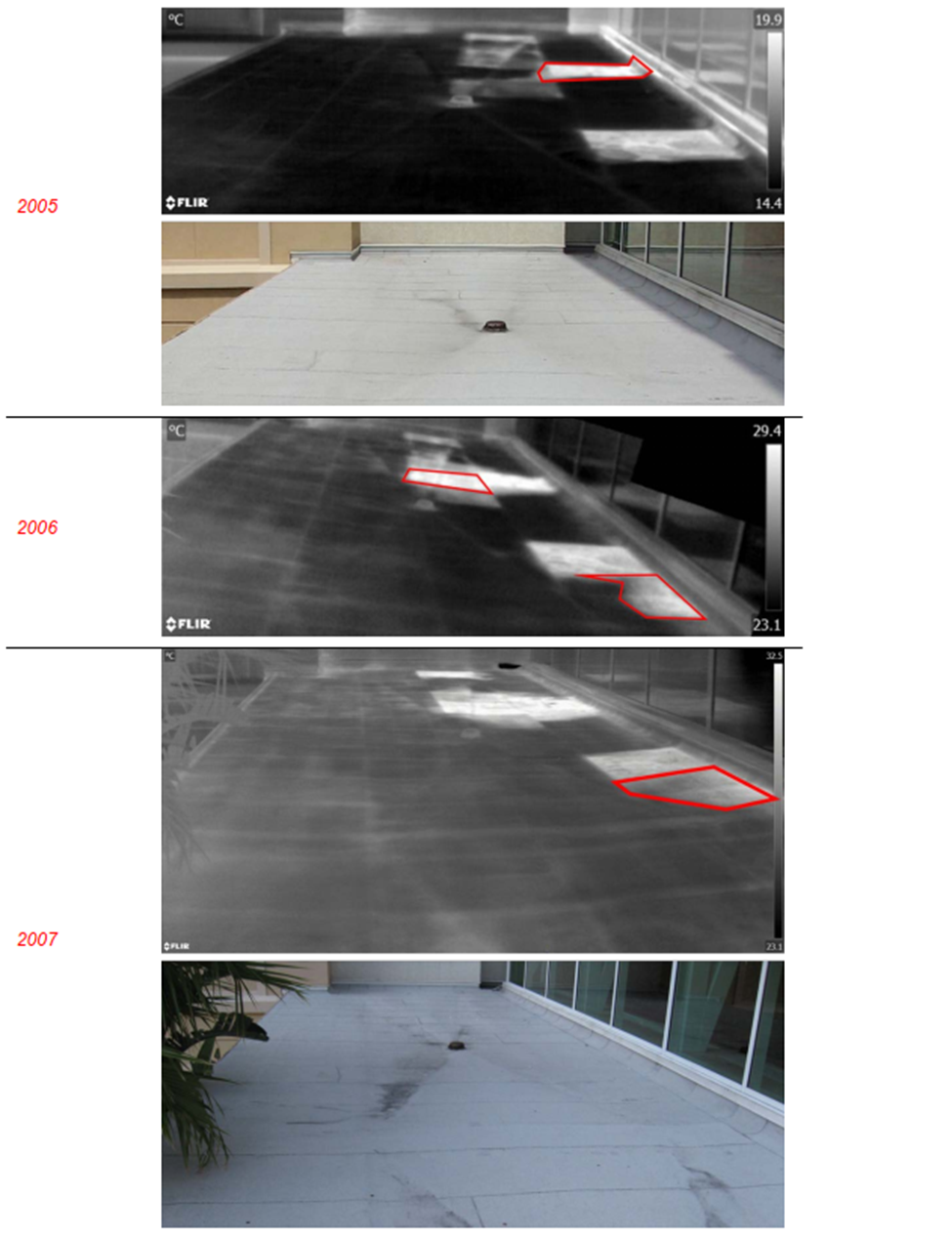
SOUTH ROOF
The south roof exhibited initial moisture in one corner. By 2009, significant degradation was evident, emphasising the importance of monitoring moisture levels in roof timbers.
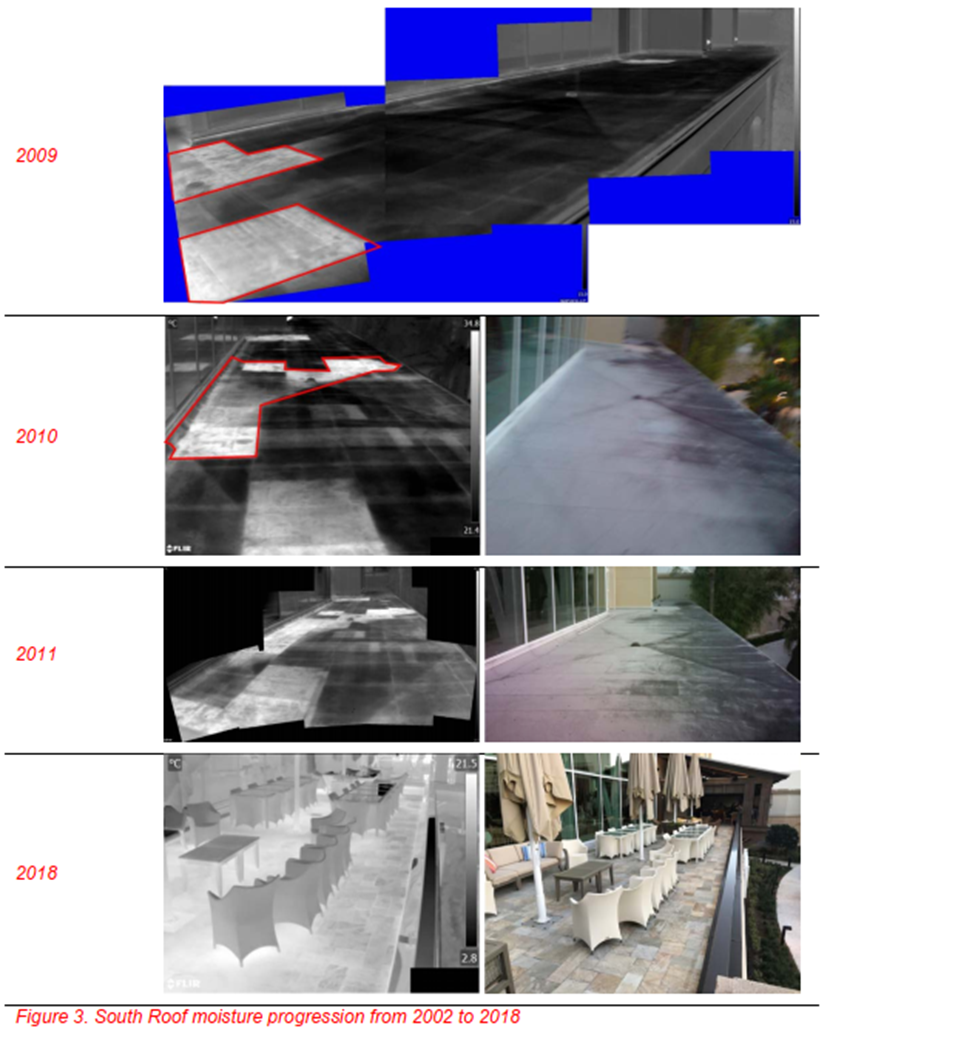
Conclusion
This study demonstrates that without timely intervention, moisture issues can escalate, leading to extensive damage. Regular infrared roof moisture scans are vital for proactive roof leak detection and maintaining the integrity of roof timbers.
ABOUT THE AUTHOR
Gary L. Orlove, P.E.
ASNT NDT/PdM Level III, TIR #80091, BINDT IRT L3-MC, L3-CV
Gary holds degrees in Energy Engineering and Zoology from the University of Wisconsin. He has been using Infrared Thermography since 1975. During that time, he has accumulated experience in field diagnostics as a consultant to industry and has worked for three major manufacturers of infrared imaging equipment. Gary has published several papers on the technology and its applications. In 2000, he cofounded the InfraMation Conference, the largest annual IR conference for thermographers. Gary is active on ASNT, ISO, and ASTM Infrared Thermography Committees and holds a professional engineer's license.
Related Articles
-
 sUAS/Drone
Aerial Solar Thermography and Condition Monitoring of Photovoltaic Systems
Read the Story -
 Electrical/Mechanical
Beware What You Cannot See: A Practical Application of the Use of IR Windows
Read the Story -
 Thermography Fundamentals
Geometry effects; hedging your bet on emissivity!
Read the Story